
Do you ever feel stuck in your English learning journey, wishing you had more opportunities to speak, but lack a regular practice partner or the confidence to join group conversations? You’re not alone. Many aspiring English speakers face the challenge of finding consistent, low-pressure environments to practice their speaking skills. The good news is, achieving fluency doesn’t always require a partner. With dedication and the right strategies, you can significantly boost your English fluency right from the comfort of your home, without needing anyone else.
This comprehensive guide will equip you with effective techniques for daily English speaking practice at home without a partner. We’ll explore how solo practice works, provide actionable steps, address common concerns, and show you how to integrate consistent speaking into your daily routine. Get ready to transform your learning experience and unlock your confident English voice.
What is Effective Solo English Speaking Practice?
Effective solo English speaking practice is more than just repeating words; it’s an active, intentional engagement with the language where you become both the speaker and the listener. It involves creating opportunities to articulate your thoughts, ideas, and observations aloud in English, even if you are the only one present. This method leverages self-awareness and self-correction to simulate real-life conversations and refine your verbal skills.
The core idea is to move beyond passive learning-like reading or listening-and actively produce spoken English. This can range from describing your surroundings to role-playing scenarios, summarizing content, or simply narrating your day’s activities in English. The goal is to build muscle memory for your mouth and brain, making the transition from thinking in your native language to thinking and speaking directly in English more seamless. It’s about building a habit of `daily English speaking practice at home without partner` to achieve consistent progress.
How Daily Solo English Practice Fosters Fluency
Many believe that fluency only comes from interacting with native speakers or advanced learners. While valuable, solo practice offers unique advantages that significantly contribute to accelerating your fluency. It works by addressing key aspects of language acquisition:
- Reduces Performance Anxiety: Practicing alone removes the pressure of judgment from others, allowing you to experiment with new vocabulary and grammar without fear of making mistakes. This psychological safety encourages more frequent and uninhibited speaking.
- Enhances Self-Correction and Awareness: When you speak alone, you become your own primary critic. Recording yourself and listening back helps you identify pronunciation errors, grammatical inaccuracies, and awkward phrasing that you might otherwise miss. This self-assessment is crucial for targeted improvement.
- Fosters Consistency and Habit Formation: Solo practice is flexible and fits into any schedule. This ease of integration makes it much simpler to establish a `daily English practice` routine, which is vital for long-term `language acquisition`. Regularity, even in short bursts, trumps infrequent, lengthy sessions.
- Personalized Learning Focus: You can tailor your practice to your specific needs and interests. If you struggle with a particular grammatical structure, you can create scenarios that require its use. If you want to expand your vocabulary on a specific topic, you can focus your solo conversations around it.
- Develops “Thinking in English”: By constantly articulating your thoughts in English, you train your brain to bypass the translation step from your native language. This direct processing is a hallmark of fluent speakers and is actively cultivated through consistent solo speaking.
How To Practice English Speaking Daily, Solo at Home: Step By Step
Ready to make `daily English speaking practice at home without partner` a reality? Here are actionable steps to integrate into your routine:
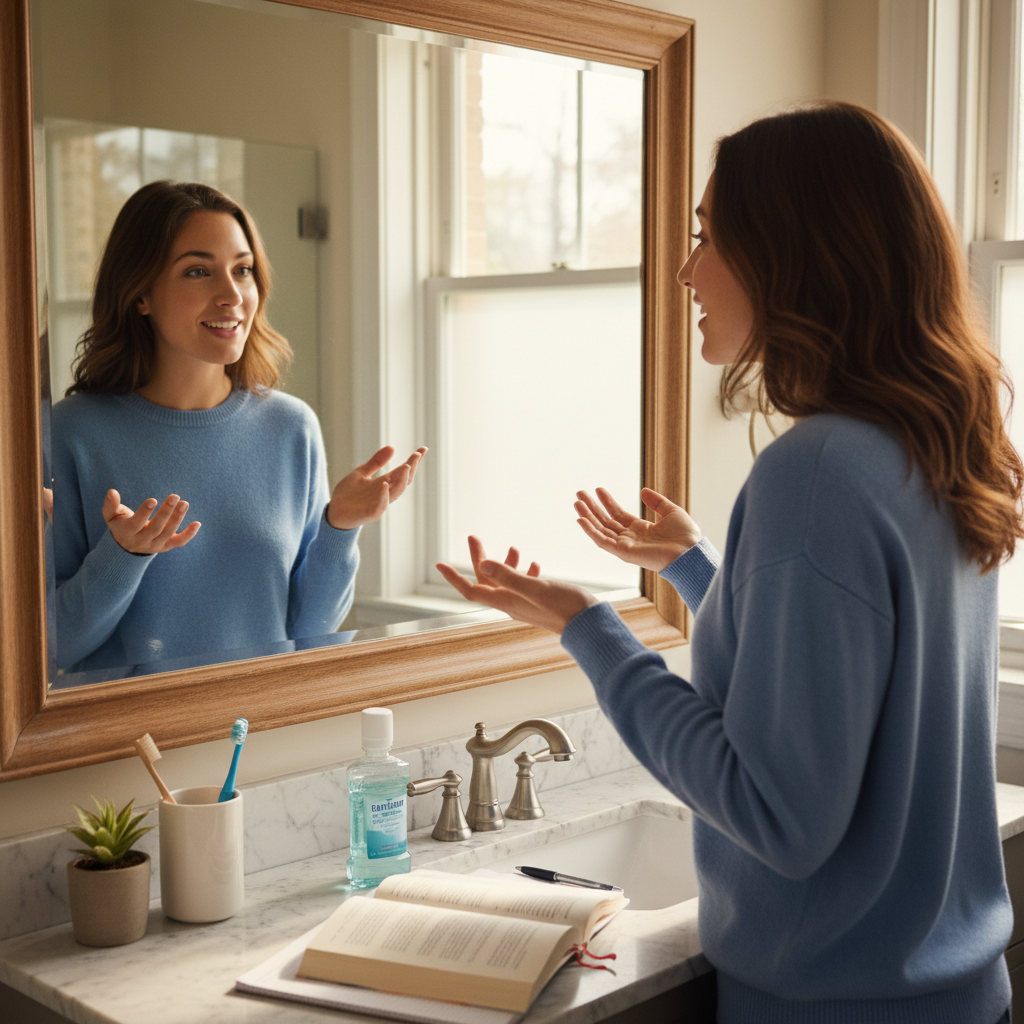
- Mirror Talk: Describe Your Day Stand in front of a mirror and simply describe what you’re doing, what you see, or how you feel. Narrate your morning routine: “I am brushing my teeth. The water is cold. I need to get dressed now.” You can also role-play conversations, perhaps practicing what you’d say in a job interview or ordering food. The mirror helps you observe your facial expressions and body language.
- Self-Recording and Review Use your phone’s voice recorder to record yourself speaking for 2-5 minutes. Talk about anything-your day, a book you read, a movie you watched, or a dream you had. Then, listen back. Pay attention to your pronunciation, intonation, pace, and grammatical accuracy. Don’t be critical; be analytical. Note areas for improvement for your next session. This is a powerful way to `improve English fluency` objectively.
- Shadowing Technique Find a short audio clip or video (2-3 minutes) from a native English speaker-a podcast, a news report, a TED Talk, or even a scene from a movie. Listen once for comprehension. Then, play it again and try to speak along with the speaker, imitating their pronunciation, rhythm, and intonation as closely as possible. Don’t worry about understanding every word; focus on mirroring the sounds. This is excellent for developing a natural accent and rhythm.
- Narrate Your Surroundings and Activities Throughout your day, silently or aloud, describe what you are doing or seeing in English. “I am walking to the kitchen. I need to make some tea. The kettle is boiling. I will add milk and sugar.” This makes `practice English at home` an ongoing activity, turning your environment into a language lab.
- Thinking Aloud in English Make a conscious effort to think your internal monologue in English. When you’re planning your day, problem-solving, or just pondering, try to do it in English. If you struggle with a word, look it up immediately. This significantly boosts your ability to formulate thoughts directly in English.
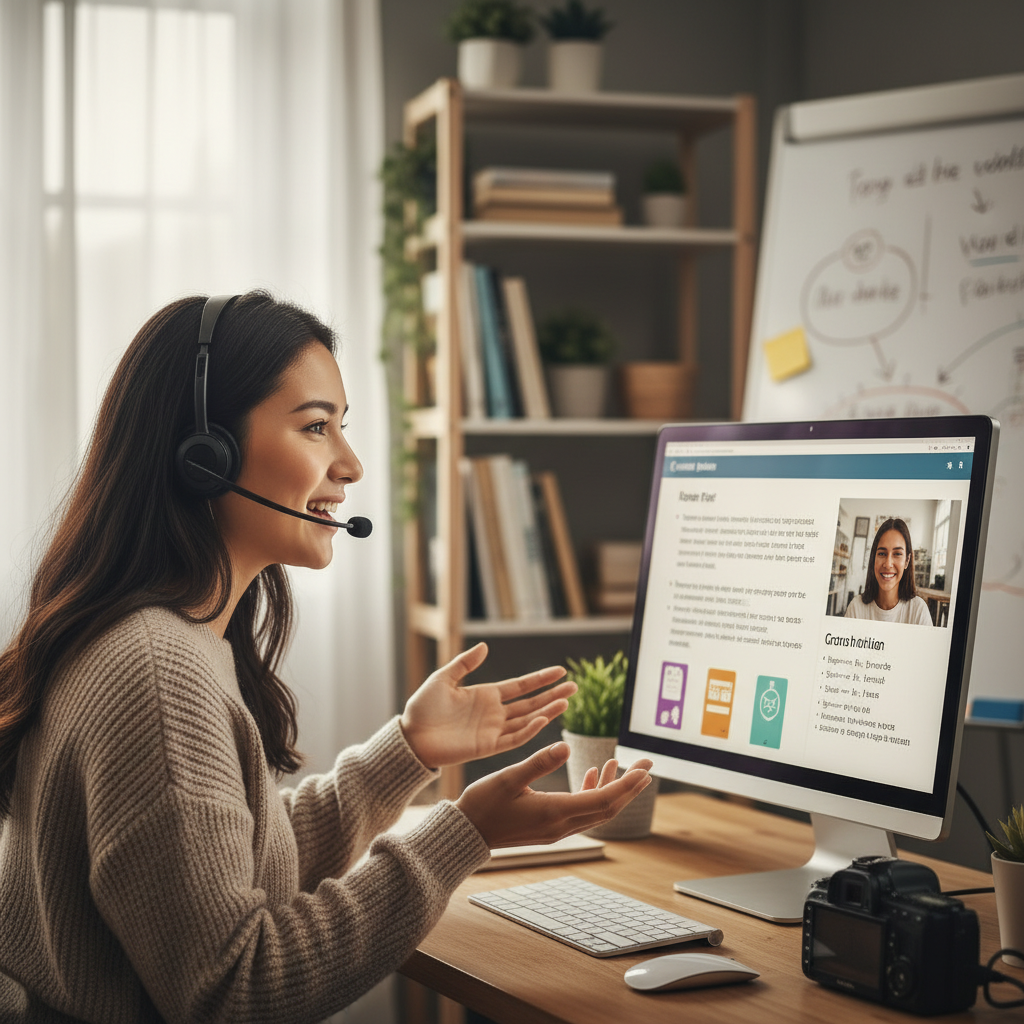
- Use AI Language Learning Apps with Speaking Features Many apps now offer AI conversation partners or speech recognition features. Apps like ELSA Speak, Duolingo, or even ChatGPT can provide prompts, correct your pronunciation, and engage you in simple conversations. This is a fantastic way to get immediate feedback on your `no partner English practice` efforts.
- Story Retelling and Summarizing After reading an article, watching a short documentary, or listening to a podcast, try to retell the main points or summarize the content aloud in English. This not only practices your speaking but also reinforces your comprehension and ability to organize thoughts coherently.
- Vocabulary Application: Use New Words Aloud When you learn a new English word, don’t just write it down. Say it aloud several times, then try to use it in 3-5 different sentences. Create scenarios where that word would be appropriate and speak those sentences aloud. For example, if you learn “meticulous,” say: “She is a meticulous planner. I need to be more meticulous with my work. Being meticulous ensures accuracy.”
Common Mistakes and Myths About Solo English Practice
To maximize your solo speaking practice, it’s important to be aware of common pitfalls and misconceptions:
- Mistake: Only Reading/Listening, Not Speaking. Many learners spend hours consuming English content but rarely produce it. Remember, active speaking is the goal of `daily English speaking practice at home without partner`.
- Myth: You *Need* a Native Speaker to Improve. While beneficial, a native speaker isn’t essential for initial progress or even significant improvement. Solo practice fills this gap effectively by developing your foundational speaking muscle.
- Mistake: Not Setting Specific Goals. Without clear objectives (e.g., “I will speak about my day for 5 minutes,” or “I will use 3 new vocabulary words”), practice can become aimless and less effective.
- Myth: Solo Practice Leads to Bad Habits. This is a common fear. However, by incorporating self-recording, shadowing, and using reliable resources for pronunciation and grammar (like dictionaries or online grammar guides), you can proactively identify and correct potential errors.
- Mistake: Lack of Consistency. Sporadic practice yields minimal results. The power of solo learning lies in its daily, cumulative effect. Even 5-10 minutes every day is far more effective than an hour once a week.
- Myth: It’s Just Awkward and Weird. Many feel self-conscious speaking to themselves. Embrace it! Frame it as a necessary training step, just like an athlete practices alone. The benefits far outweigh any initial awkwardness.

Real-Life Scenarios: Integrating English Practice Into Your Day
The beauty of `daily English speaking practice at home without partner` is its adaptability. Here’s how different people can fit it in:
For the Busy Professional
Your day is packed, but you can still find pockets of time. During your commute, whether driving or on public transport, you can narrate your plans for the day or summarize recent news in English. During a lunch break, instead of mindless scrolling, try describing your meal or role-playing an upcoming meeting presentation. Before bed, spend 5 minutes reviewing your day aloud in English, focusing on what went well and what you plan for tomorrow. This helps reinforce `daily English practice` without adding significant extra time.
For the Stay-at-Home Parent
Integrate English into your daily routines. When doing chores, describe each step aloud: “Now I’m washing the dishes. First, I rinse, then I soap, then I rinse again.” When reading to your children, explain concepts in simple English, or narrate their playtime. During quiet moments, like nap time, record yourself speaking about your thoughts or summarizing a parenting article you read. Even explaining what you’re doing to your children (if they are old enough) in English can be a great way to `practice English at home`.
For the Student
Use English practice to enhance your studies. If you’re studying a subject in English, try to explain concepts or summarize chapters aloud in English to yourself. Practice presenting project ideas or answering potential exam questions verbally. When reviewing notes, articulate key points in English. Before you begin studying, state your study goals in English, and afterwards, review your progress aloud.
For the Aspiring Traveler
If you’re planning a trip, prepare for common travel scenarios. Role-play ordering food at a restaurant, checking into a hotel, asking for directions, or going through airport security. Practice describing your home country or culture in English. This targeted `no partner English practice` can significantly boost your confidence for real-world interactions abroad.
Learn English with Parul Arya’s Approach to Fluency
At Learn English with Parul Arya, we understand the unique challenges and opportunities that come with self-directed learning, especially when it comes to developing conversational fluency. Our philosophy centers on empowering learners to build confidence, articulate thoughts clearly, and master the nuances of English communication. We believe that while a partner can be beneficial, the most significant progress often comes from consistent, deliberate self-practice, combined with expert guidance.
Our resources and methodologies are designed to complement and enhance your `daily English speaking practice at home without partner`. We provide structured lessons that build vocabulary, grammar, and pronunciation, giving you the tools to articulate your thoughts more effectively. We also offer techniques and exercises that you can seamlessly integrate into your solo practice routines, ensuring that your self-study is always productive and geared towards measurable improvement. We’re here to provide the framework and support you need to turn solo practice into exceptional fluency.
Still Not Sure? Addressing Your Concerns About Solo Practice
It’s natural to have questions when embarking on a new learning strategy. Let’s address some common concerns:
- “Won’t I develop bad habits without correction?” Not if you are diligent! Incorporate self-recording and careful listening to native speakers (through shadowing). Utilize online dictionaries for pronunciation and grammar checkers for written practice (then speak what you’ve written). The key is active self-monitoring and a commitment to improvement. See second-language acquisition principles for more insights.
- “It feels awkward speaking to myself.” This is a common initial feeling. Remind yourself that this is a powerful, effective learning technique. Many successful polyglots use this method. Focus on the goal-greater fluency and confidence-rather than the temporary awkwardness. It gets easier with practice.
- “How do I know if I’m improving if no one is listening?” Regular self-recording is your best friend here. Keep a folder of your recordings and listen to older ones periodically. You’ll likely notice improvements in your speed, vocabulary usage, grammar, and overall flow. Setting specific, measurable goals also helps track progress.
Making Daily Solo English Practice Work Long Term
Consistency is paramount, but maintaining motivation can be tough. Here’s how to ensure your `daily English speaking practice at home without partner` becomes a sustainable habit:
- Set Realistic Expectations: Don’t expect to become perfectly fluent in a week. Celebrate small victories and acknowledge that improvement is a gradual process.
- Vary Your Methods: Don’t stick to just one technique. Rotate through mirror talk, shadowing, self-recording, and thinking aloud to keep things fresh and engaging.
- Track Your Progress: Keep a simple journal or use a spreadsheet to note down what you practiced, for how long, and any new words or phrases you used. Seeing your commitment grow can be highly motivating.
- Reward Yourself: Set small, achievable milestones (e.g., “After 7 days of consistent practice, I’ll watch an episode of my favorite show in English”).
- Integrate, Don’t Isolate: Weave English practice into activities you already do. This makes it feel less like an extra chore and more like a natural part of your day.
- Connect with the “Why”: Always remember your motivation for learning English. Is it for career advancement, travel, personal growth, or connecting with others? Keeping your “why” front and center will fuel your dedication to `practice English daily`.
Summary: Empower Your English Fluency at Home
Achieving English fluency doesn’t have to be dependent on finding a speaking partner. `Daily English speaking practice at home without partner` is a powerful, accessible, and highly effective method to boost your confidence, refine your pronunciation, expand your vocabulary, and train your brain to think directly in English. By integrating techniques like mirror talk, self-recording, shadowing, and narrating your daily life, you can transform your home into a dynamic language lab. Embrace these strategies with consistency and purpose, and you’ll be amazed at the progress you make. Start practicing today, and unlock your true English speaking potential!
Sources
- Language acquisition – Wikipedia
- Second-language acquisition – Wikipedia
- Fluency – Wikipedia
- Self-study – Wikipedia
- E-commerce – Wikipedia
Frequently Asked Questions About Solo English Practice
Q: How much time should I dedicate to solo English practice daily?
A: Even 10-15 minutes of focused daily practice can yield significant results. Consistency is more important than duration. If you can do more, great, but aim for manageable, regular sessions.
Q: What if I run out of things to talk about?
A: Draw inspiration from your daily life, news, books, movies, or podcasts. Describe objects around you, summarize recent events, or react to an article you’ve read. Use prompt generators online if you need specific topics.
Q: Can solo practice replace speaking with others entirely?
A: While solo practice is incredibly effective for building foundational fluency and confidence, engaging with other speakers (when opportunities arise) is still valuable for dynamic conversation, real-time negotiation of meaning, and exposure to different accents and speaking styles. Solo practice prepares you for these interactions.
Q: Are there specific apps recommended for solo speaking practice?
A: Yes, many apps can assist. Consider apps like ELSA Speak for pronunciation feedback, Duolingo or Babbel for structured lessons that include speaking exercises, and even AI chatbots like ChatGPT for conversational practice and prompt generation.
Q: How can I stay motivated to practice alone every day?
A: Set small, achievable goals, track your progress, vary your practice methods, and remind yourself of your “why”-your ultimate reason for learning English. Make it a non-negotiable part of your daily routine, just like brushing your teeth.