
Feeling stuck when it comes to speaking English fluently? Many learners experience frustration, wishing they had more opportunities to practice with native speakers or in formal settings. The good news is that you don’t need to leave your house to make significant progress. This comprehensive guide will show you how consistent, daily English speaking practice at home can transform your confidence and fluency. We’ll explore practical strategies, common pitfalls to avoid, and how to integrate effective techniques into your routine to unlock your full potential.
Whether you’re a beginner struggling with basic conversations or an advanced learner aiming for nuanced expression, cultivating a structured approach to speaking English in your personal space is key. This article provides actionable steps and insights tailored to help you build a strong foundation and advance your spoken English skills, all from the comfort of your home.
What Is Daily English Speaking Practice at Home?
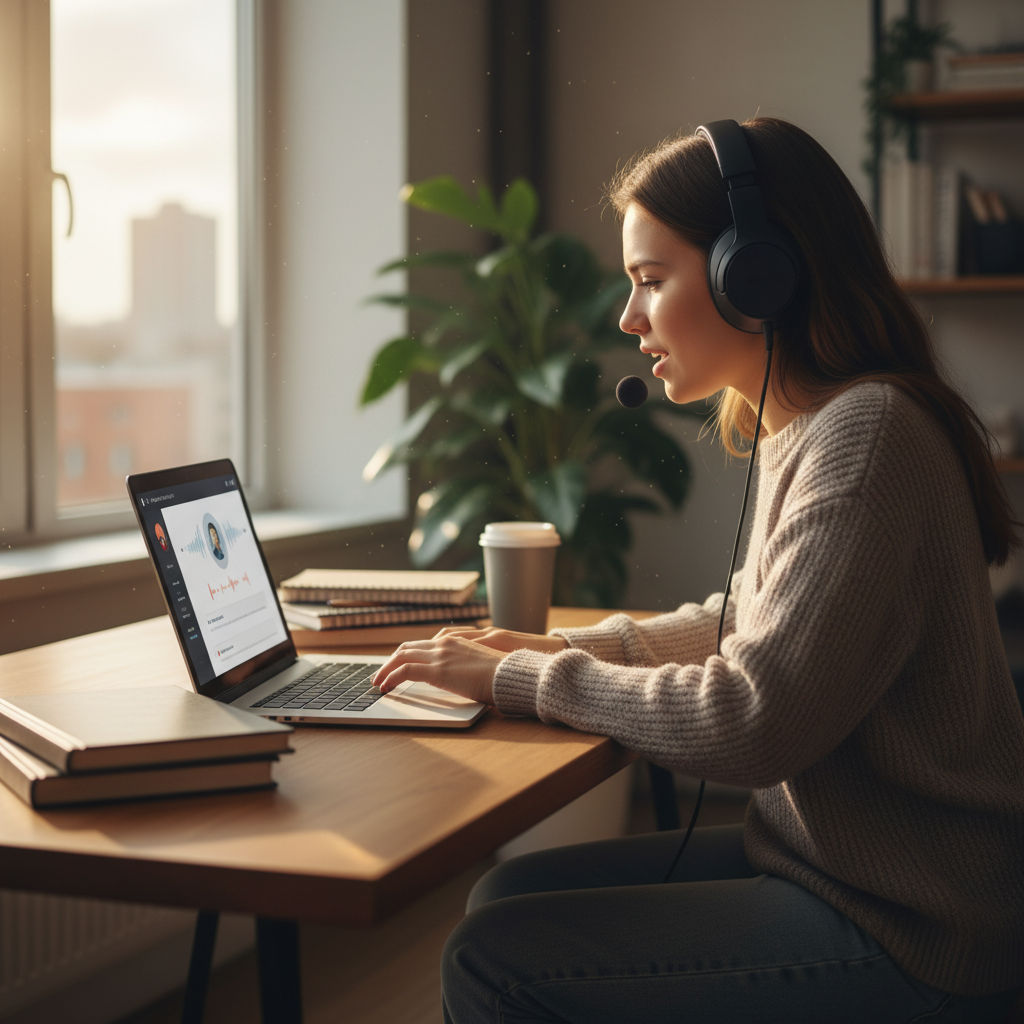
Daily English speaking practice at home refers to a dedicated, consistent regimen of self-directed activities designed to improve your spoken English without the immediate need for a teacher or conversation partner. It’s about creating your own immersive environment and actively engaging with the language through various methods. This approach empowers you to take control of your learning journey, making progress at your own pace and convenience.
Unlike passive learning, such as listening to podcasts or watching movies, active speaking practice involves producing language yourself. It cultivates muscle memory for your mouth and tongue, strengthens your vocabulary recall, and builds confidence in forming coherent sentences. This self-study method is highly effective because it allows for frequent, low-pressure interaction with English, making it a sustainable path to fluency.

How Daily English Speaking Practice at Home Actually Works
The effectiveness of daily English speaking practice at home lies in its ability to simulate real-world language use and build a strong foundation through consistent effort. It operates on several core pillars that, when combined, create a powerful learning ecosystem. Understanding these pillars will help you maximize your practice sessions.
- Consistent Exposure and Immersion: The human brain learns languages best when constantly exposed to them. At home, you can control your environment to be English-rich. This means surrounding yourself with English audio, video, and text, and consciously choosing to process information in English. This constant immersion helps you internalize grammar patterns, expand your vocabulary, and develop a natural rhythm for the language, even when you’re not actively speaking.
- Active Production and Self-Correction: Merely understanding English isn’t enough for speaking fluency. You must actively produce the language. This involves articulating thoughts, describing experiences, and constructing sentences aloud. The critical second part is self-correction, where you listen to your own speech, identify errors, and actively work to refine them. This iterative process of speaking, listening, and refining is fundamental to improving pronunciation, grammar, and overall clarity.
- Leveraging Everyday Scenarios: Your home environment offers countless opportunities for organic practice. Instead of waiting for a formal lesson, you can integrate English into daily routines like describing chores, narrating your actions, or planning your day aloud. This makes the learning process practical and relevant to your life, building confidence in using English for real communication.
- Mindset and Motivation: Successful language acquisition is deeply tied to mindset. Approaching practice with curiosity, patience, and a willingness to make mistakes is crucial. Daily home practice fosters self-reliance and discipline, turning language learning into an empowering personal journey. Maintaining motivation through achievable goals and celebrating small victories ensures long-term commitment.
By consciously engaging with these pillars, your daily home practice transforms from a series of isolated exercises into a holistic and dynamic pathway towards English fluency.
How To Practice English Speaking Step By Step
Transforming your home into an effective English speaking laboratory requires a structured approach. Here are practical, step-by-step methods you can implement daily to significantly improve your spoken English.
- Shadowing Technique: This is a powerful method for improving pronunciation, intonation, and rhythm. Find an English audio source- a podcast, a short video clip, or an audiobook. Listen to a short segment (30-60 seconds) once or twice, then try to speak along with the speaker exactly at the same time, mimicking their every sound, pause, and inflection. Don’t worry about understanding every word initially; focus purely on mirroring the sounds. Repeat the same segment multiple times until you feel your pronunciation improving. You can find more about shadowing on Wikipedia’s page on Language Immersion, which often involves active listening techniques like shadowing.
- Self-Talk and Narration: Start talking to yourself in English throughout the day. Describe your actions as you perform them: “I am making coffee,” “Now I am pouring the water,” “The water is boiling.” Narrate your thoughts, plans, and observations. This might feel unusual at first, but it forces you to retrieve vocabulary and construct sentences on the fly, mimicking real conversation.
- Record Your Voice: Use your phone or a simple recording app to record yourself speaking. Pick a topic you’re interested in, read a paragraph aloud from a book, or answer common interview questions. After recording, listen back critically. Pay attention to:
- Pronunciation of specific words
- Clarity and pace of your speech
- Grammar and sentence structure
- Pauses and fillers like “um” or “uh”
- Role-Play Different Scenarios: Imagine various situations and act them out aloud. You can be a customer ordering at a restaurant, an employee giving a presentation, or a friend making plans. Play both roles yourself to practice different conversational patterns and responses. This builds confidence for real-life interactions.
- Read Aloud Daily: Choose any English material- a novel, a news article, a blog post, or even product labels- and read it aloud. This practice helps connect the written word with its spoken form, improving your pronunciation and helping you internalize sentence structures naturally. Focus on articulating each word clearly and maintaining a natural flow.
- Summarize and Retell: After reading an article, watching a short video, or listening to a podcast, summarize the main points aloud in your own words. Then, try to retell the story or explain the concept to an imaginary listener. This forces you to process information and synthesize it into spoken English, enhancing your comprehension and articulation skills.
- Vocabulary in Context: When you learn new vocabulary, don’t just memorize the word. Create 2-3 sentences using the new word in different contexts and say them aloud. For example, if you learn “perseverance,” say “Perseverance is key to learning a language,” or “Her perseverance helped her achieve her goals.” This embeds the word more deeply into your active vocabulary.
- Mirror Practice: Stand in front of a mirror and engage in a conversation with your reflection. This allows you to observe your facial expressions, gestures, and body language while speaking, providing non-verbal feedback that can enhance your overall communication style. Practice maintaining eye contact and speaking with confidence.
Common Mistakes And Myths
Embarking on your daily English speaking practice journey can be incredibly rewarding, but it’s important to be aware of common pitfalls and misconceptions that can hinder your progress. Avoiding these will ensure your efforts are effective and sustainable.
- Mistake: Waiting for Perfection Before Speaking. Many learners delay speaking until they feel their grammar is flawless or their vocabulary is extensive. This fear of making mistakes is the biggest barrier to fluency. The truth is, mistakes are a natural and necessary part of the learning process. Embrace them as opportunities for growth, not as failures.
- Myth: You Need a Native Speaker to Improve. While interaction with native speakers is beneficial, it’s not a prerequisite for significant improvement. As demonstrated by the methods above, consistent self-practice and utilizing available resources can lead to remarkable progress. Focus on creating your own immersive environment.
- Mistake: Only Focusing on Passive Learning. Watching English movies, listening to music, or reading books are excellent for comprehension and exposure, but they are passive activities. Without active production- actually speaking- your speaking skills will not develop effectively. Balance passive input with active output.
- Myth: Quick Fixes and Instant Fluency. Learning a language is a marathon, not a sprint. There are no magical shortcuts to fluency. Beware of programs or promises that suggest you can become fluent overnight. Consistent, dedicated practice over time is the only reliable path to mastery.
- Mistake: Neglecting Pronunciation and Intonation. Many learners prioritize vocabulary and grammar but overlook the importance of how words sound. Poor pronunciation can lead to misunderstandings, even with correct grammar. Actively practice intonation, stress, and individual sounds using techniques like shadowing.
- Myth: One Method Fits All. What works for one person might not work for another. Experiment with different techniques mentioned in this guide and find what resonates most with your learning style and goals. Adapt your practice to keep it engaging and effective for you.
Real Life Scenarios for Home Practice
Applying your daily English speaking practice at home to real-life situations makes the learning more relevant and enjoyable. Here’s how different individuals can integrate these techniques into their routines.
For the Working Professional
As a working professional, your English speaking needs might revolve around presentations, meetings, and networking. Leverage your home practice to simulate these scenarios.
- Meeting Rehearsals: Before a virtual meeting, practice opening remarks, key discussion points, or potential responses to questions aloud. Record yourself and listen back to refine your professional tone and clarity.
- Presentation Practice: Rehearse your presentations in front of a mirror. Focus not just on words but also on gestures, pacing, and confident delivery.
- Role-play Emails/Calls: Imagine you’re drafting an important email or making a business call. Speak out the content of the email or the conversation flow before writing or dialing.
For the Student
Students often face academic discussions, group projects, and essay explanations. Home practice can significantly boost confidence in these areas.
- Discussing Study Material: After reading a chapter, summarize its key concepts aloud as if explaining them to a classmate. Practice articulating your opinions on controversial topics.
- Exam Prep Narratives: For subjects requiring explanation, narrate potential answers to exam questions. This helps solidify knowledge and practice concise verbal articulation.
- Imaginary Group Projects: Role-play different team members contributing to a project, practicing how to agree, disagree, suggest, and conclude in English.
For the Homemaker/Parent
Everyday life at home offers a wealth of spontaneous speaking opportunities. Integrate English into your daily chores and interactions.
- Narrating Daily Chores: As you cook, clean, or garden, describe your actions and thoughts aloud. “I am chopping vegetables,” “The laundry needs folding,” “I wonder if it will rain today.”
- English with Family: If your family is open to it, designate short periods where everyone tries to speak English. With children, label objects, sing English nursery rhymes, or read English storybooks aloud together.
- Planning and Organizing: Articulate your grocery list, plan for the day, or organize your schedule aloud in English. This helps structure thoughts and reinforce vocabulary related to household management.

Learn English with Parul Arya’s Approach
At Learn English with Parul Arya, we understand that effective English speaking practice at home is about more than just memorizing words- it’s about building confidence, developing a natural flow, and truly connecting with the language. Our philosophy centers on creating a supportive and structured learning environment that empowers individuals to overcome their inhibitions and speak English with clarity and conviction. We believe that everyone possesses the inherent ability to master English, and our role is to provide the tools and guidance to unlock that potential.
Our methodology emphasizes practical application, much like the daily home practice techniques outlined in this guide. We focus on bridging the gap between theoretical knowledge and real-world communication. Through carefully designed exercises, interactive sessions, and personalized feedback, we encourage learners to step out of their comfort zones and actively engage with English. We demystify complex grammar, simplify pronunciation challenges, and provide strategies for vocabulary acquisition that stick, ensuring that what you learn can be immediately applied in your daily speaking practice.
We champion the idea that consistent effort, coupled with the right techniques, leads to profound and lasting results. Our approach integrates elements of active listening, guided speaking exercises, and scenario-based role-playing to ensure comprehensive development. We are committed to fostering a growth mindset, where mistakes are seen as stepping stones to improvement, and every small victory is celebrated. With Learn English with Parul Arya, you don’t just learn English; you learn to speak English confidently and naturally, making your at-home practice even more fruitful.
Still Not Sure? Common Objections Addressed
It’s natural to have doubts or face challenges when committing to daily English speaking practice at home. Let’s address some common objections.
“I’m too busy- I don’t have time for daily practice.”
You don’t need large blocks of time. Even 10-15 minutes of focused practice daily can make a significant difference. Integrate it into existing routines: describe your morning coffee ritual, narrate your commute, or summarize a news article while waiting for dinner to cook. Small, consistent efforts compound over time.
“It feels awkward talking to myself.”
This is a common feeling initially. Think of it as a form of mental rehearsal. Professional athletes visualize their performance, and public speakers practice their speeches alone. This isn’t just “talking to yourself”; it’s a deliberate and highly effective language learning technique. Embrace the awkwardness; it’s a sign you’re pushing your boundaries.
“I don’t know what to talk about.”
The world is full of topics! Start simple: describe your room, recount your day, explain your favorite hobby, or review a movie you watched. Use prompts like “What are my plans for tomorrow?” or “If I could travel anywhere, where would it be?” You can also use news headlines, YouTube comments, or social media posts as conversation starters for your self-talk.
“What if I make mistakes and nobody corrects me?”
Self-correction is a vital part of home practice. Record yourself and listen back with a critical ear. Use online dictionaries for pronunciation and grammar checkers for written practice (then speak it aloud). While external feedback is valuable, learning to identify and correct your own errors builds a deeper understanding of the language. Focus on communication first; perfection comes with time.
Making It Work Long Term: Sustaining Your Practice
Consistency is the bedrock of language acquisition. To ensure your daily English speaking practice at home becomes a lasting habit, consider these long-term strategies.
- Set Realistic, Achievable Goals: Instead of aiming for “fluency in a month,” set smaller, measurable goals like “practice shadowing for 15 minutes daily” or “narrate my morning routine in English for a week.” Celebrate each small achievement to boost motivation.
- Vary Your Activities: Monotony can lead to burnout. Rotate between different speaking practice methods- shadowing one day, self-talk the next, role-playing on another. Introduce new audio materials, topics, and scenarios to keep things fresh and engaging.
- Track Your Progress: Keep a simple journal or use an app to note down what you practiced, for how long, and any new words or phrases you learned. Periodically listen to older recordings of yourself to truly appreciate how far you’ve come. Seeing tangible improvement is a powerful motivator.
- Find a Low-Pressure Accountability Partner: While practice is at home, a friend who also wants to improve English can be a great motivator. You don’t necessarily need to speak together daily, but you can check in with each other, share resources, or even send short voice notes in English. This adds a social element without the pressure of formal conversation partners.
- Be Patient and Kind to Yourself: Language learning has plateaus and bursts of progress. There will be days when you feel stuck or frustrated. Acknowledge these feelings, but don’t let them derail your consistency. Remind yourself why you started, and remember that every little bit of practice contributes to your long-term goal.
- Integrate English into Hobbies: If you love cooking, watch English cooking shows and narrate the steps. If you enjoy gaming, play games with English-speaking players. The more you connect English to things you genuinely enjoy, the easier it will be to sustain your daily practice over the long haul.
Summary & Take Action Today
Mastering English speaking doesn’t require expensive courses or trips abroad. By dedicating yourself to daily English speaking practice at home, you can cultivate a rich, immersive environment that fosters fluency and confidence. We’ve explored foundational pillars like consistent exposure and active production, along with practical techniques such as shadowing, self-talk, and role-playing. By embracing these strategies and avoiding common pitfalls, you can transform your spoken English from the comfort of your own space.
The journey to fluency is continuous, built on small, consistent efforts. Don’t wait for the perfect moment or a native speaker to appear; your home is a powerful classroom. Start today by choosing just one or two techniques from this guide and integrate them into your routine. Embrace mistakes as learning opportunities, celebrate your progress, and watch as your ability to communicate in English blossoms. Your voice matters- give it the practice it deserves.
Sources
- Second-language acquisition – Wikipedia
- Language immersion – Wikipedia
- Practice (learning method) – Wikipedia
- Self-talk – Wikipedia
Frequently Asked Questions About Daily English Speaking Practice at Home
Q: How long will it take to see results from daily home practice?
A: Results vary greatly depending on your starting level, consistency, and the intensity of your practice. However, most individuals notice improvements in confidence and fluency within 2-3 months of consistent daily practice. Significant gains typically occur over 6-12 months or more.
Q: Do I need to buy special books or software for home practice?
A: Not necessarily. Many effective methods use free resources like podcasts, news websites, YouTube videos, and your own voice recorder. While supplementary materials can be helpful, the core of daily English speaking practice at home relies on active engagement and creativity with what you already have.
Q: What if I make mistakes and there’s no one to correct me?
A: Self-correction is a key skill developed through home practice. Record yourself, listen critically, and compare your speech to native speakers. Use online dictionaries for pronunciation and grammar resources. While external feedback is valuable, learning to identify and correct your own errors is crucial for independent learning.
Q: How often should I practice to make it effective?
A: Aim for daily practice, even if it’s just 10-15 minutes. Consistency is more important than duration. Short, frequent sessions are more effective for language acquisition than long, infrequent ones because they keep the language active in your mind and reinforce learning.
Q: Is practicing alone enough, or do I need a conversation partner?
A: Practicing alone is highly effective for building a strong foundation in pronunciation, vocabulary recall, and sentence formation. However, eventually, interaction with other speakers is beneficial for developing conversational flow, listening comprehension in real-time, and adapting to different accents. Start alone, and once confident, seek out conversation partners.